










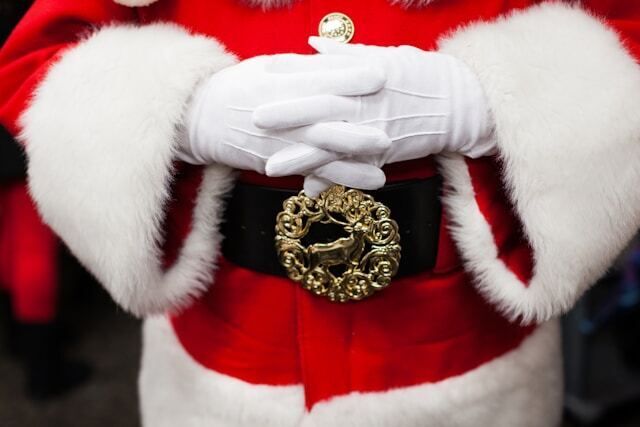
The holidays are here, and it’s the most wonderful time of the year! Everywhere you look the streets are covered in lights, garland and ornaments. The fresh winter snow fills the air with a chilly cheer. And of course there’s one more thing around every corner… a big round man with a fresh white beard in a red coat, joyfully proclaiming, “Ho! Ho! Ho!”
Santa Claus is a staple of the winter season, and has been for a very long time. But what do we really know about this jolly legend? Today, we’re going to find out. Check out these fun facts, figures and folklore about the man in the big red suit.
Where did Santa Claus come from?
The legend of Santa Claus can be traced all the way back to the 3rd century. He is believed to have originated from the monk St. Nicholas around the year 280 A.D., in Patara, near Myra of modern-day Turkey. Since its origin, the legend of Santa Claus has only grown, mixing in different cultures, traditions and folklore.
Who was St. Nicholas?
St. Nicholas lived as the Bishop of Myra, and became a legend through his profound generosity and kindness. He was known as an anonymous gift-giver by paying for the dowries of impoverished girls, and giving treats and coins to children.
Over time, the tradition became that children would leave their shoes out on the stoop at night for St. Nicholas to come and leave goodies in their shoes. The monk soon became immortalized as the patron saint of children, and his popularity had spread all throughout Europe by the Renaissance time period. Holland especially took a liking to this kind, jolly saint.
When did he become Santa Claus?
Fast forward another 1,500 years to the year 1773, when the legend of St. Nicholas first became known as “Santa Claus.” The Dutch tradition of Sinterklaas—based on St. Nicholas himself—told the story of a bishop who traveled from town to town, delivering treats to children on December 5th.
In December of 1773, Santa Claus came to the United States. A New York newspaper first brought attention to this story by reporting on the groups of Dutch families who had gathered to honor the death of St. Nicholas. Thus, St. Nicholas evolved to Sinterklaas, who evolved to Santa Claus, and was officially finalized and popularized in American culture.
Why the chimney?
You may be asking, “That’s a great story of Santa Claus, but where did all the extra stuff come from? Why the chimney?” Well, we have Washington Irving to thank for that piece of information, from his 1809 satirical book A History of New York. Irving decided to completely redefine the idea of Santa Claus, from a saintly bishop to a jolly, stout man in a red suit. And it was Irving who created the tradition of Santa Claus coming down the chimney, like any good house guest. From then on, the chimney was the way to go.
What about Mrs. Claus?
Turns out, Santa Claus was a bachelor for a very long time. It wasn’t until 1849 that there was any mention of a spouse for the merry man. In his 1849 short story A Christmas Legend, James Rees first introduces the idea of a Mrs. Claus. Mrs. Claus then burst into wide popularity in 1889, with the poem Goody Santa Claus on a Sleigh Ride by Katherine Lee Bates. Santa Claus may have waited a long time for some companionship, but it was well worth it.
This holiday season, have some fun remembering the history and folklore that’s brought us here. Enjoy your time with friends, family and the local community by celebrating with some delicious ford and storytelling. And of course, don’t forget to lay out some cookies and milk for the man in the big red suit.


